First-Time RV Rentals — Complete Guide to Your First Trip
Typical rate: $165-$245/night
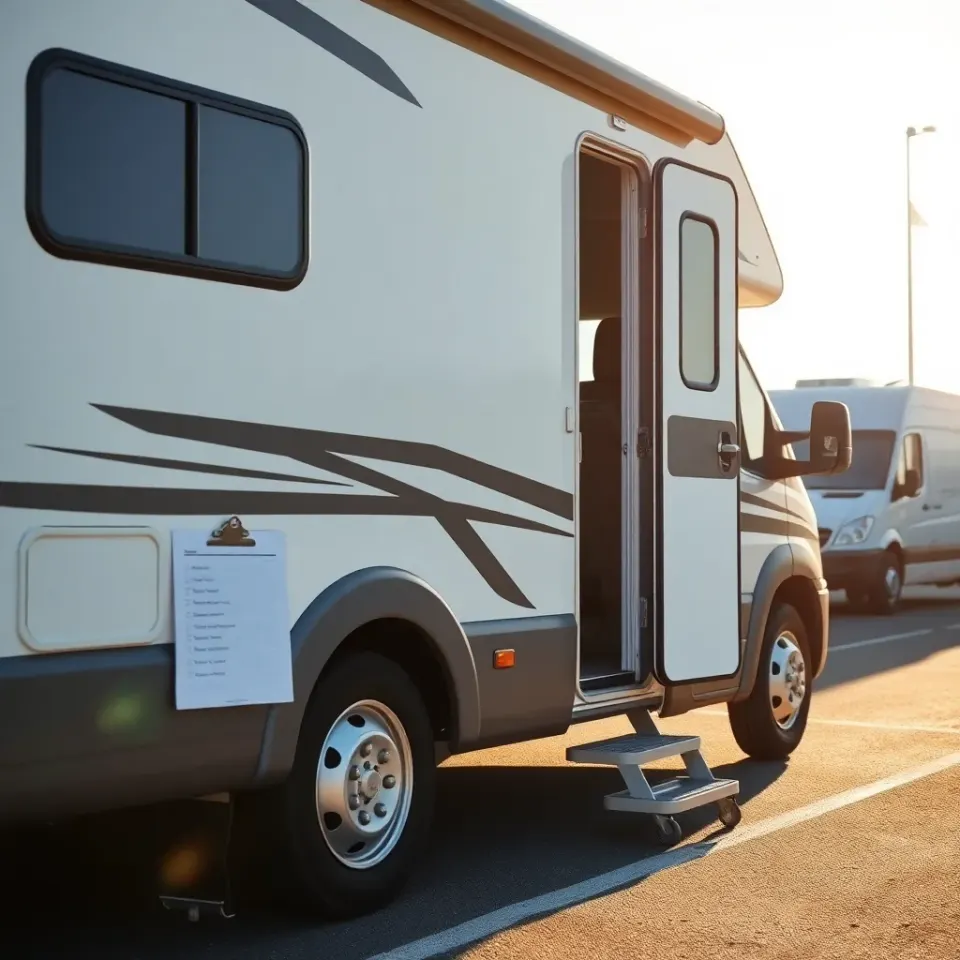
I hand RV keys to first-time renters most weeks, and the trip almost always goes the same way it started at the lot: calm if we took our time at handoff, frantic if we didn’t. That’s the real lesson of a first RV rental — the vehicle is easy, the walkthrough is everything. What follows is the operator-side version: which rig to pick, what actually happens at pickup, and what the first trip costs, with live-market numbers from our July 2026 pull of 3,398 listings.
Which RV class should a first-timer rent?
A 25–28 ft Class C — it drives like a box truck, sleeps 4–6, and fits most campgrounds. Our data puts the Class C median at $229/night. It’s the rental industry’s sweet spot for a reason: no special license, standard at every company, and the best documentation and training behind it.
See the full Class C rental guide. What to avoid on a first trip:
- Class A motorhomes — too much vehicle for a beginner (and the priciest class at a $300 median).
- Travel trailers and fifth wheels — real towing skill and, for a fifth wheel, a specific truck.
- Class B campervans — fine solo, cramped for a family.
- Specialty rigs (toy hauler, vintage) — unfamiliar systems you’ll be learning on the fly.
Where should you rent for the first time?
Pick the operator with the longest walkthrough — that handoff matters more to a first-timer than a few dollars off the nightly rate. Two models dominate:
Fireside RV Rental and similar franchises run a 45–60 minute walkthrough, a newer 2–4 year fleet, direct phone access to a local operator, and delivery at some locations, at premium pricing ($165–$245/night). Cruise America and El Monte RV trade a quicker 25–30 minute handoff and an older fleet for lower rates ($125–$165), a bigger network, and better peak availability. If budget is tight, El Monte’s slightly longer walkthrough is worth the small premium over Cruise America.
How long should a first RV trip be?
Four to five nights to a single destination 100–200 miles from home — long enough to learn the rig, short enough to forgive mistakes.
| Duration | First-timer experience |
|---|---|
| 2 nights | Test-drive feel; learn systems |
| 3–4 nights | Good first trip; one destination |
| 5–7 nights | Best first-trip length; some travel |
| 10–14 nights | Stretch goal; more than most first-timers want |
| 2+ weeks | Save it for the second rental |
Where are the best first-timer destinations?
Close, established, and forgiving beats iconic-but-complex every time. Somewhere with real campground infrastructure lets you focus on the rig, not the logistics:
| Destination | Why it works |
|---|---|
| Asheville, NC | Mountain scenery, RV-friendly campgrounds |
| Knoxville, TN | Great Smoky Mountains access, good infrastructure |
| Bradenton, FL (winter) | Established RV-resort culture, mild weather |
| Apache Junction, AZ (winter) | Desert resorts, easy conditions |
| Blue Ridge, GA | Family-friendly Toccoa River camping |
Save Yellowstone (too far, too complex), Yosemite (length limits, reservation pressure), and Death Valley (extreme conditions) for a later trip.
What happens at pickup?
Plan two to three hours: paperwork, a systems walkthrough, and a photographed condition report. Bring your driver’s license, a credit card in your name, and your auto-insurance card. The walkthrough runs through driving basics, electrical (shore power, generator, batteries), plumbing (fresh water, dump procedure, propane), appliances, safety gear, the provided kit, and roadside assistance.
Take notes and photos of every system — this is the single thing that separates a smooth first night from a 9 p.m. call to the lot. Then walk the rig with the staff member and photograph every existing scratch, dent, tire, and interior mark. Don’t drive away without a signed condition report.
What goes wrong — and how do you handle it?
Most first-trip “problems” are handoff details, not failures — call the operator before you touch anything. The recurring ones we field:
- Can’t level the rig — usually user error; we’ll talk you through it.
- Slide-out won’t move — call before driving, never force it.
- AC feels weak — check the filter, restart the compressor.
- Black tank won’t dump — confirm the gate valve is open, try the flush.
- Generator won’t start — check fuel and, on some rigs, propane.
- Battery drained — connect shore power or briefly idle the engine for the chassis battery.
For a real mechanical breakdown or accident, call roadside assistance or police first and document everything; the rental insurance guide covers what’s protected. The rental mistakes guide lists the errors that cost first-timers the most.
What does a first trip cost?
About $400/day all-in for a Class C — the nightly rate is roughly half the real number.
| Line item | Amount |
|---|---|
| Class C rental: $185/night × 5 | $925 |
| Fees + insurance + cleaning | $350–$500 |
| Fuel (500 mi @ 8 mpg @ $3.80/gal) | $237 |
| Campground fees | $150–$300 |
| Activities and meals | $300–$500 |
| All-in 5-day trip | $1,962–$2,462 |
For the full budgeting method, see our RV rental cost guide.
Bottom line
First rentals are straightforward once you treat the walkthrough as the main event. Book a Class C from a long-walkthrough operator, plan a 4–5 night trip to a close, established destination, photograph everything at pickup, and call the operator before you improvise. Do that and the second trip is the one where you get adventurous — see our reviews hub when you’re ready to pick a company.
Frequently Asked Questions
What size RV should a first-timer rent?
A Class C motorhome, 25–28 feet. It drives like a U-Haul box truck with no special license, sleeps four to six, fits most national-park campgrounds, and every major company stocks it with good training. Skip Class A (too much vehicle), trailers and fifth wheels (towing skill), and specialty rigs for a first trip.
How long does RV rental pickup take?
Plan two to three hours. The walkthrough covers driving, electrical, plumbing, appliances, safety gear, the provided kit, and roadside assistance, and then you photograph the rig's condition. As an operator I'd rather spend an extra 30 minutes at handoff than field a panicked call from a campground that night.
How much does a first-time RV trip cost?
About $400 a day all-in. A typical 5-day Class C trip runs roughly $1,960–$2,460: about $925 base rate, $350–$500 in fees and insurance, ~$237 fuel for 500 miles, $150–$300 campgrounds, and $300–$500 for meals and activities.
What's the most common mistake first-time RV renters make?
Rushing the walkthrough. From the operator side, the calls we get — the slide that won't retract, the black tank that won't dump, the AC that seems weak — are almost always things the handoff covered but the renter didn't note. Take phone photos and notes of every system.
Should a first-timer use Cruise America or a franchise like Fireside?
Either works. A franchise such as Fireside gives a longer 45–60 minute walkthrough, a newer fleet, and direct operator phone access at premium pricing. Cruise America and El Monte offer lower rates, a bigger network, and better peak availability with a quicker 25–30 minute handoff. First-timers who want hand-holding pay a little more for the longer walkthrough.
Where should you go on a first RV trip?
Somewhere close, established, and forgiving — 100–200 miles out with good campground infrastructure. Asheville NC, Knoxville near the Smokies, and Bradenton FL in winter all work. Save Yellowstone, Yosemite, and Death Valley for your second or third trip once the systems are second nature.