National Park Campground
Badlands Cedar Pass Campground
Interior, South Dakota · (392 reviews)
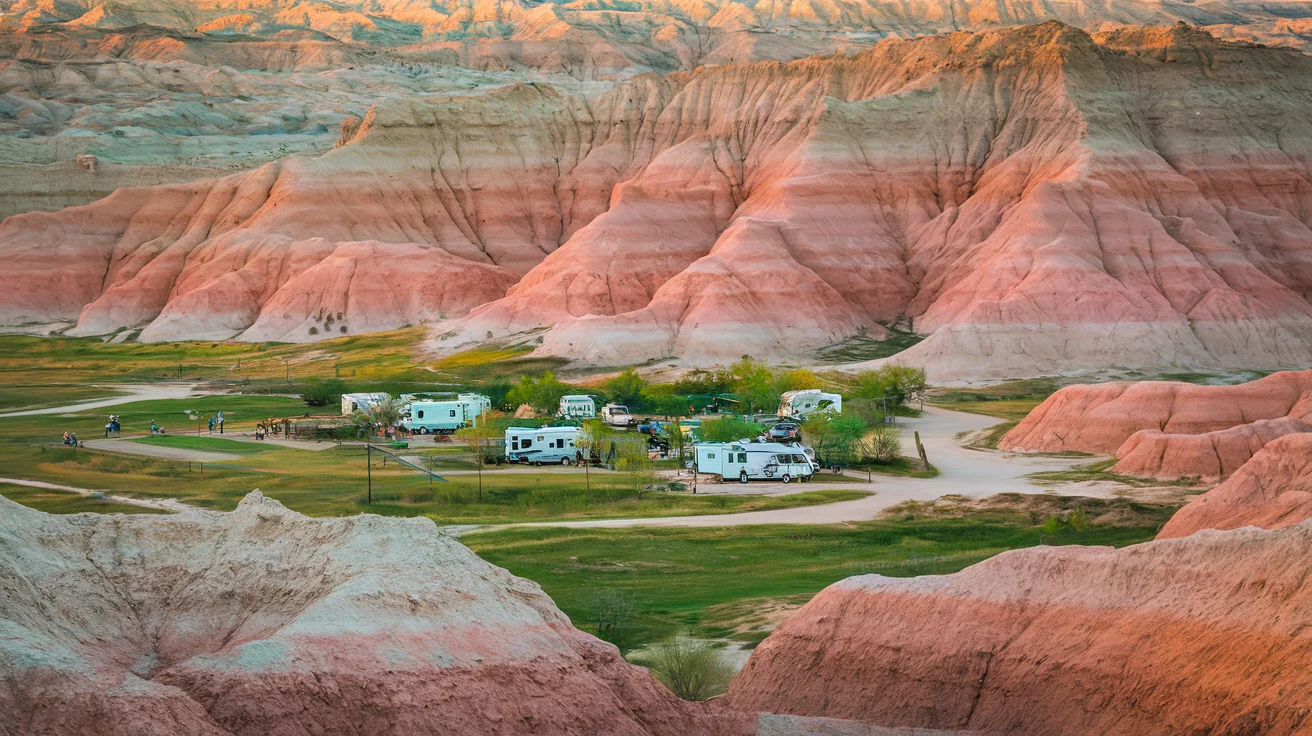
We rolled into Cedar Pass late in the afternoon, and the thing that stops you cold is that there’s nothing between you and the formations — you’re camping in them, not beside them. No trees, no fences, just a prairie site with sawtooth ridges glowing orange as the sun drops. This is the most dramatic and the most affordable campground in the Black Hills region, and it asks something in return: you camp on exposed ground in real weather, and you take the sites as they come.
Can you reserve a site, or do you have to show up early?
Plan on first-come, first-served — there are no guaranteed reservations, so timing is your reservation. On July and August weekends the loops can fill by late morning, and we’ve circled waiting for someone to pull out. Two things fix it: arrive early (before the late-morning rush on weekends), or come midweek, when you’ll often have your pick. Spring and fall rarely fill at all. If you strike out, Wall is about 8 miles north and has a fallback.
What does it cost, and does that price hold?
When we researched rates in July 2026, primitive sites ran about $22/night and 30-amp electric sites about $37/night — but National Park camping fees change, so read that as a snapshot, not a promise.
| Site type | Approx. rate (as of July 2026) | Notes |
|---|---|---|
| Electric (30 amp) | ~$37/night | Power at the site, no water/sewer hookup |
| Primitive | ~$22/night | No hookups, picnic table, fire grate |
Those fees are separate from the park entrance charge, and an America the Beautiful pass covers entry but not camping. For how a nightly rate fits into a full trip budget, see our RV rental cost guide.
Which site should you request?
Chase shade you have to make yourself, and in summer chase power. There isn’t a shade tree in the place, so site strategy is different here than most campgrounds.
- In summer: take a 30-amp electric site if one is open. Highs sit at 95–100°F with no relief, and the AC needs shore power.
- For shade: park so the rig throws afternoon shadow over your chairs, and bring a free-standing canopy — the flimsy tent stakes won’t survive the wind, so use long, heavy-duty ones.
- For trails and the visitor center: the loops nearer Cedar Pass Lodge put the Door, Window, and Notch trailheads within a five-minute walk.
Who is it best for?
Photographers, stargazers, and budget travelers who value the setting over the amenities. You get sunrise on the formations from your own site, trails out the door, and dark-sky nights that are hard to match anywhere. What you give up is comfort: no shade, extreme heat and wind, no showers at camp, seasonal water, and weak cell service. If that trade sounds worth it, few campgrounds pay off like this one.
Bottom line
Cedar Pass is raw, cheap, and unforgettable — camping inside a National Park’s headline landscape with trails and a night-sky program at your doorstep. Come prepared for heat and wind, take an electric site in summer, arrive early on weekends, and treat the posted fee as a moving target. Round out the trip with our Black Hills city guide and South Dakota state guide.
Which sites to request
- There is no shade anywhere, so orient for it: park so the rig itself throws afternoon shade on your sitting area and bring a free-standing canopy.
- If you want the shortest walk to the Door and Window trailheads and the visitor center, take a loop on the east side near Cedar Pass Lodge.
- Prefer an electric site in July and August — 30-amp power for the AC is the difference between sleeping and roasting when it's 100°F with no trees.
Pros
- You camp inside the formations, not near them — sunrise and the dark-sky nights are the whole reason to be here
- Cheapest camping in the region: primitive sites are budget-friendly and trails start a five-minute walk from your door
- Ranger night-sky programs and some of the darkest skies in the country
Cons
- Zero shade and extreme heat, wind, and sudden storms — this is exposed prairie camping
- First-come, first-served with no reservations, so summer weekends can fill by late morning
- No showers at the campground (Cedar Pass Lodge charges), water and flush toilets are seasonal, and cell service is weak
Amenities
- Electric Hookups (30 amp, limited sites)
- Flush Toilets (summer only)
- Drinking Water (May–September)
- Dump Station (summer only)
- Picnic Tables
- Fire Grates
- Amphitheater / Night Sky Programs
- Cedar Pass Lodge (0.25 mi)
- Gift Shop & Store
- Trailheads at Camp
- Pet Friendly (leashed)
Plan the rest of the trip
Frequently Asked Questions
Can you reserve a site at Cedar Pass, or is it first-come, first-served?
Plan for first-come, first-served — there are no guaranteed reservations here. On July and August weekends the campground can fill by late morning, so arrive early or have a backup near Wall about 8 miles north. Weekdays and the spring and fall shoulders are far easier, and you'll often have your pick of sites.
What does it cost to camp at Badlands Cedar Pass?
When we researched rates in July 2026, primitive sites ran about $22/night and 30-amp electric sites about $37/night. That's on top of the park entrance fee (an America the Beautiful pass covers entry but not the camping fee). National Park camping fees move over time, so treat those numbers as a research-date snapshot and confirm the live rate.
Is the electric site worth the extra money over primitive?
In summer, yes. There is no shade and daytime highs hit 95–100°F, so 30-amp power for the air conditioning is close to essential unless you have serious battery and solar capacity. In the cooler May and September shoulders, nights drop into the 60s and 50s and a primitive site with fans is comfortable, which is where the savings make sense.
Are there showers at the campground?
Not at the campsites. Cedar Pass Lodge, about a quarter-mile walk, has coin-operated showers, so bring quarters or plan to use your onboard shower. Water and flush toilets at the campground are seasonal (roughly May–September); the rest of the year you're on vault toilets.
How bad is the wind and weather?
Take it seriously. This is open prairie with no windbreak, and gusts routinely rock a big rig. Put out all your stabilizer jacks, bring in the awning, and retract slides if the wind climbs. Afternoon thunderstorms in July and August can build fast, so keep an eye on the sky and have a weather radio.
Is the stargazing actually that good?
It's some of the darkest sky you'll find in the country. The ranger night-sky program at the amphitheater (roughly May–September) is genuinely worth staying up for. Bring a red flashlight to protect everyone's night vision, and check the moon phase — a new moon gives you the darkest, most dramatic Milky Way.